AI video rendering advancements set the stage for this enthralling narrative, offering readers a glimpse into a story that is rich in detail and brimming with originality from the outset. As technology continues to evolve, the impact of AI on video rendering processes is becoming increasingly significant, paving the way for exciting innovations and possibilities.
In this exploration, we delve into the concept of AI video rendering, the specific algorithms driving this evolution, the role of deep learning techniques, and the real-time rendering capabilities that are reshaping industries like gaming, film, and virtual reality.
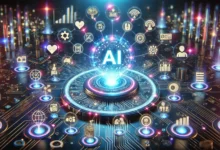
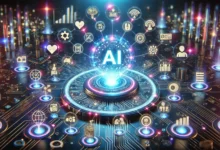
AI Video Rendering Advancements
AI video rendering involves using artificial intelligence algorithms to enhance and optimize the process of creating high-quality videos. By leveraging AI technology, video rendering can be done more efficiently, leading to faster production times and improved visual outcomes.
One example of how AI is transforming video rendering is through the use of deep learning algorithms to upscale lower resolution videos to higher quality. This technique, known as super-resolution, allows for the enhancement of video quality without losing details or sharpness.
Another way AI is making an impact in video rendering is through the automated detection and removal of visual imperfections such as noise, artifacts, or blurriness. AI algorithms can analyze video frames in real-time and make corrections to ensure a smooth and flawless final product.
The benefits of using AI in video rendering are numerous. AI-powered tools can significantly reduce the time and effort required to edit and render videos, allowing content creators to focus on the creative aspects of their work. Additionally, AI can help improve the overall quality of videos by enhancing colors, sharpness, and overall visual appeal. Overall, AI video rendering advancements are revolutionizing the way videos are produced and consumed in the digital age.
AI Algorithms for Video Rendering
AI algorithms play a crucial role in advancing video rendering technology, enhancing both the quality and speed of the rendering process. These algorithms are designed to analyze, process, and optimize various aspects of video rendering, resulting in more realistic visuals and efficient production.
Specific AI Algorithms
- Neural Networks: Neural networks are commonly used in AI video rendering to simulate human brain functions and process complex visual data. They can learn from existing video content and generate new frames or enhance existing ones.
- Deep Learning: Deep learning algorithms, a subset of machine learning, are utilized to extract features from video data and make intelligent decisions to improve rendering quality.
- Generative Adversarial Networks (GANs): GANs consist of two neural networks – a generator and a discriminator – that work together to produce high-quality, realistic video frames. GANs are particularly effective in creating detailed textures and enhancing overall visual appeal.
Comparison of AI Algorithms
- Neural Networks vs. Deep Learning: While neural networks focus on mimicking human brain functions, deep learning algorithms delve deeper into data processing and feature extraction, resulting in more detailed and accurate video rendering.
- Deep Learning vs. GANs: Deep learning algorithms excel at feature extraction and decision-making, whereas GANs specialize in generating new content and enhancing visual quality through adversarial training.
- Neural Networks vs. GANs: Neural networks are versatile in learning from existing content, while GANs are specifically designed for generating new, realistic visuals in video rendering.
Enhancements by AI Algorithms
- Quality Improvement: AI algorithms analyze video data at a granular level, identifying patterns and details that human eyes might miss. This leads to sharper images, vibrant colors, and more realistic visual effects.
- Speed Optimization: By automating certain aspects of the rendering process, AI algorithms significantly reduce the time required for rendering complex video scenes. This results in faster production cycles and more efficient workflows.
- Adaptive Rendering: AI algorithms can adapt to different video content requirements, adjusting rendering parameters in real-time to optimize quality and performance based on the specific needs of each project.
Deep Learning in Video Rendering
Deep learning plays a crucial role in revolutionizing video rendering processes by leveraging complex algorithms to enhance visual quality and efficiency.
Applications of Deep Learning in Video Rendering
- Deep learning techniques such as convolutional neural networks (CNNs) are utilized to analyze and process video data, enabling the identification of patterns and features for improved rendering outcomes.
- Generative adversarial networks (GANs) are employed to generate realistic and high-quality images, reducing artifacts and enhancing overall visual fidelity in rendered videos.
- Recurrent neural networks (RNNs) are used for temporal modeling, allowing for the prediction and generation of smooth transitions and motion in video sequences.
Examples of Deep Learning Improving Video Rendering
- Deep learning algorithms can be trained to remove noise and enhance image quality in low-light video footage, resulting in clearer and more detailed renderings.
- By utilizing deep learning-based super-resolution techniques, video resolution can be upscaled while preserving sharpness and detail, leading to higher-quality output.
- Deep learning models can also be employed for video inpainting, seamlessly filling in missing or damaged areas in frames to maintain visual continuity and coherence.
Role of Neural Networks in Video Rendering Enhancement
- Neural networks serve as the backbone of deep learning algorithms in video rendering, enabling sophisticated processing and analysis of video data for optimal results.
- Through extensive training on large datasets, neural networks can learn complex relationships within video content, allowing for accurate prediction and manipulation of visual elements.
- The adaptability and scalability of neural networks make them ideal for handling the diverse and intricate tasks involved in video rendering, ranging from denoising to object tracking and beyond.
Real-time Rendering with AI
Real-time rendering refers to the ability to generate visuals instantly as they are needed without any noticeable delay. Advances in AI technology have played a significant role in enabling real-time video rendering capabilities, revolutionizing industries like gaming, film, and virtual reality.
AI Technologies for Real-time Rendering
AI technologies like neural networks and machine learning algorithms have been instrumental in achieving real-time rendering in various applications. These technologies help optimize rendering processes, reduce latency, and enhance overall visual quality.
- One example of AI technology supporting real-time rendering is NVIDIA’s RTX platform, which utilizes AI-powered algorithms to improve rendering performance and efficiency.
- Another example is Unreal Engine’s AI-driven features that enable real-time ray tracing and dynamic global illumination, enhancing visual realism in games and other interactive experiences.
- AI-powered denoising techniques have also been crucial in reducing noise and artifacts in real-time rendered images, improving overall visual clarity and quality.
Impact on Industries
The integration of real-time AI rendering has had a profound impact on industries such as gaming, film production, and virtual reality, transforming the way visuals are created and experienced.
- In the gaming industry, real-time AI rendering has enabled developers to create immersive worlds with stunning graphics and seamless gameplay, enhancing the overall gaming experience for players.
- For film production, real-time rendering with AI has accelerated the rendering process, allowing filmmakers to visualize complex scenes and special effects in real-time, leading to more efficient production workflows.
- In virtual reality, real-time rendering powered by AI has helped create more realistic and interactive VR experiences, providing users with immersive environments and simulations that respond dynamically to their actions.
Last Recap
In conclusion, AI video rendering advancements represent a powerful fusion of technology and creativity, offering limitless potential for transforming the way we produce and consume visual content. As AI continues to push boundaries and redefine possibilities, the future of video rendering is poised for groundbreaking advancements that will shape the digital landscape for years to come.
